Blog Archives
Pizza, Burgers and Technology Delivered Fresh to My Classroom
During an after-school study session this week for AP exams, I wondered aloud what my blog topic would be. From a spot somewhere among a pizza-eating group of Seniors, a voice rang out, “Pizza!”
“Pizza would be great,” I shouted back, “but I need to focus on the technological side of educating you.” But then again, maybe the student was right. There was classroom technology in pizza. The new online ordering systems for pizza are ripe for introducing functions and linearity to students. So what if the result is a bunch of orders cancelled at the last possible moment.
Most pizza places now have online ordering, many with the option of building your own custom pizza. Extra ingredients cost extra (duh!), but increasing at a constant rate for most added ingredients. Students can quickly see that a model can be created to predict the final cost of a pizza with a particular amount of extra items.
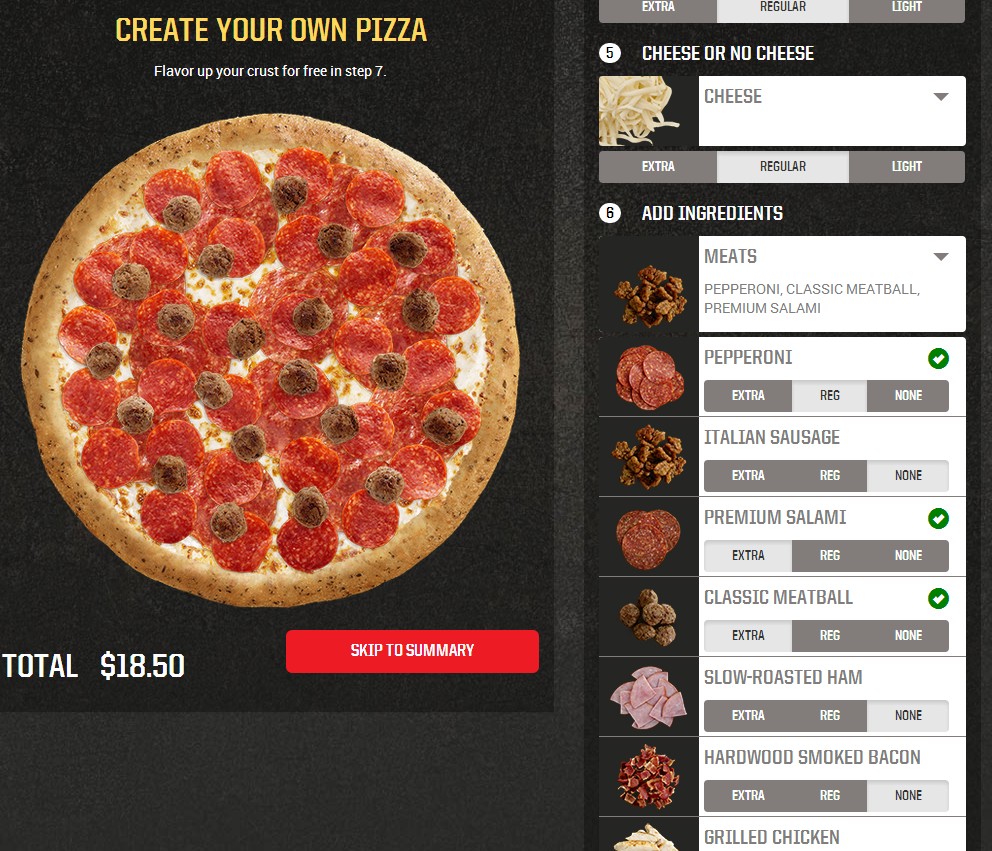
Ten extras are the limit. It won’t cook completely after that. (Sounds like a math problem to me.)
More recently added in our region is a fast-food hamburger restaurant that delivers. I thought I had died and gone to heaven when I heard that you can order hamburgers and French fries online and have them delivered to your door. Isn’t this world amazing, or what? The website of the restaurant of “the king who shall not be named” allows customers to build their own burgers and chicken sandwiches.
While the customer builds the meal, the price is adjusted accordingly. Plotting this data on a coordinate plane allows students to create a scatterplot of burger prices based on a variety of differently priced extras. Using this data, students can construct a linear regression line through the scatterplot to estimate the price of a burger with a certain amount of extras. Other task-based problems involving this data may include a comparison of retail and profit models as well as a discussion of outliers and influential points.
The current influx of computers in the classroom provides an opportunity for students to explore actual websites to construct mathematical models of common tasks, like ordering pizza or burgers online. These tasks align with the Common Core State Standards and Standards for Mathematical Practice. Lesson designs for this type of activity include web searches, scavenger hunts, and WebQuest templates. The range of difficulty could be adjusted to fit a wide range of grade and mathematical skill levels.
Another benefit of using pizza and burger websites to develop functions and linear regression models is the quality of the graphics. Modeling software using “pizza building” functions have been around for a while, but the vividness and realism of current websites makes adding all the extras even more fun.
The Good, The Bad, and The SBAC
The Good
It’s high noon and the roll out of the SBAC online testing is tomorrow. Administrators have organized the school into areas of testing and non-testing, with our Seniors presenting their Senior Projects in the non-testing areas. Alternative classrooms have been designated in the event that wireless should fail (as it did in my wing this week). Each proctor has a assistant who has received training in conducting the exam and what drink we want from Starbucks.
The first test is the computer adaptive math test, and the allotted time for administering it is around two and a half hours. The test is untimed, so if students don’t finish in two and a half hours, well…we’ll cross that bridge when we get there. Actually, there is supposed to be a designated location where students can go and complete their tests, but that means they have to log off and log back on. Students will have to stop at a saved point to avoid re-doing problems. This move could result in a number of interesting events, but I’ll save those for the next blog.
The Bad
Day 2 is beginning to cause consternation among the faculty now that we have seen the activity that is the basis of the task questions. Most of us did not realize that half of the math portion of the assessment would be task-based.
Over 25% of Florin High School’s students are EL, with many more having been previously classified as EL. Typically our students struggle more with word-based problems and applications. Students and teachers don’t make excuses for doing poorly on those problems. There is just a steeper hill to climb to get to the answer.
A list of accepted accommodations.
The SBAC
The Smarter Balanced Assessment Consortium has established “accommodations” for English Language Learners and Students with Disabilities, but even with pre-programmed accommodations, Day 2 will be challenging for those with the EL designation and for those without it. The data collected on our students for this assessment will certainly have a significant impact on future instruction. Reading and writing across the curriculum has long been a focus, but a greater emphasis on reading mathematical material will surely emerge.
But for now, we will breathe deep, get a good night’s sleep, and be ready when Starbucks opens tomorrow. Tune in next week for the Good, the Bad, and the Ugly of the SBAC assessments.
Getting Ready For The Common Core Assessments
After having a joke fall flat in my Algebra class, a student leaned over to me and whispered “Tell it to us again, it will be funny this time.”
But this week, at our monthly math department meeting, I presented practice problems for the second time from the Smarter Balanced Assessments. This time from the training test, a short 8-question test. From the look on my colleagues face, there was nothing funny about what they saw.
The discussions that followed were not so much about the math as they were about how our students are going to be able to understand and access the technology involved in calculating and entering a solution. With only a minimal amount of experience on the Chromebooks, would our students remember where to find the calculator? Would they understand how to group expressions with appropriate parentheses?
On April 22nd and 23rd our school will be taking the new summative (Common Core) assessment by Smarter Balanced Assessment Consortium (SBAC). We hope the joke will not be on us.
As we near the inaugural assessment, anxiousness grows among the administrators and teachers at our school and, I’m guessing, at many schools across our great state. Our school wasn’t part of the Field Test of the assessment because we didn’t have enough computer labs, nor did our technology infrastructure support mobile wireless carts. Chromebooks arrived just this year to provide roughly a 1 to 4 student-to-computer ratio. Our wireless infrastructure was updated and many teacher’s desktops were upgraded from Windows XP. We are now ready to go … or are we?
As the Common Core coordinator for my department, I took special care in making sure that our teachers new what was on the practice SBAC exams. We worked in teams and examined the 7th, 8th, and 11th grade practice exams. We discussed where our students might struggle with the mathematics, the technology, or both. I created lists of vocabulary words from the middle and high school practice tests and passed them out to the whole school. We assembled 2-inch binders with information that would help us transition. Many PLC mornings were dedicated to being prepared for the assessments.
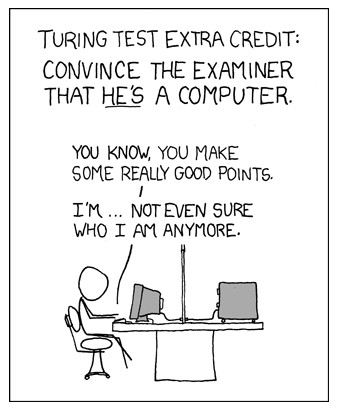
Let the Common Core assessments begin.
The SBAC assessment folks assume that the test takers won’t be under additional mental stress when using “drag and drop” procedures, or using the notepad, or locating the calculator and using it’s numbers and symbols. But our students, whom many have no computers or internet, have not developed a comfort level where there won’t be significant mental demand just operating the Chromebook. Many of our teachers also share that discomfort and are making every effort to give students more practice time with the computers.
Are the new assessments a catalyst for change in the use of technology? Absolutely. Are we ready for that change? Probably not, but it’s here, and on April 22nd and 23rd a new era of technology in education will drive it’s way into our classrooms.


 Cleaning Off The Whiteboard