Blog Archives
Pizza, Burgers and Technology Delivered Fresh to My Classroom
During an after-school study session this week for AP exams, I wondered aloud what my blog topic would be. From a spot somewhere among a pizza-eating group of Seniors, a voice rang out, “Pizza!”
“Pizza would be great,” I shouted back, “but I need to focus on the technological side of educating you.” But then again, maybe the student was right. There was classroom technology in pizza. The new online ordering systems for pizza are ripe for introducing functions and linearity to students. So what if the result is a bunch of orders cancelled at the last possible moment.
Most pizza places now have online ordering, many with the option of building your own custom pizza. Extra ingredients cost extra (duh!), but increasing at a constant rate for most added ingredients. Students can quickly see that a model can be created to predict the final cost of a pizza with a particular amount of extra items.
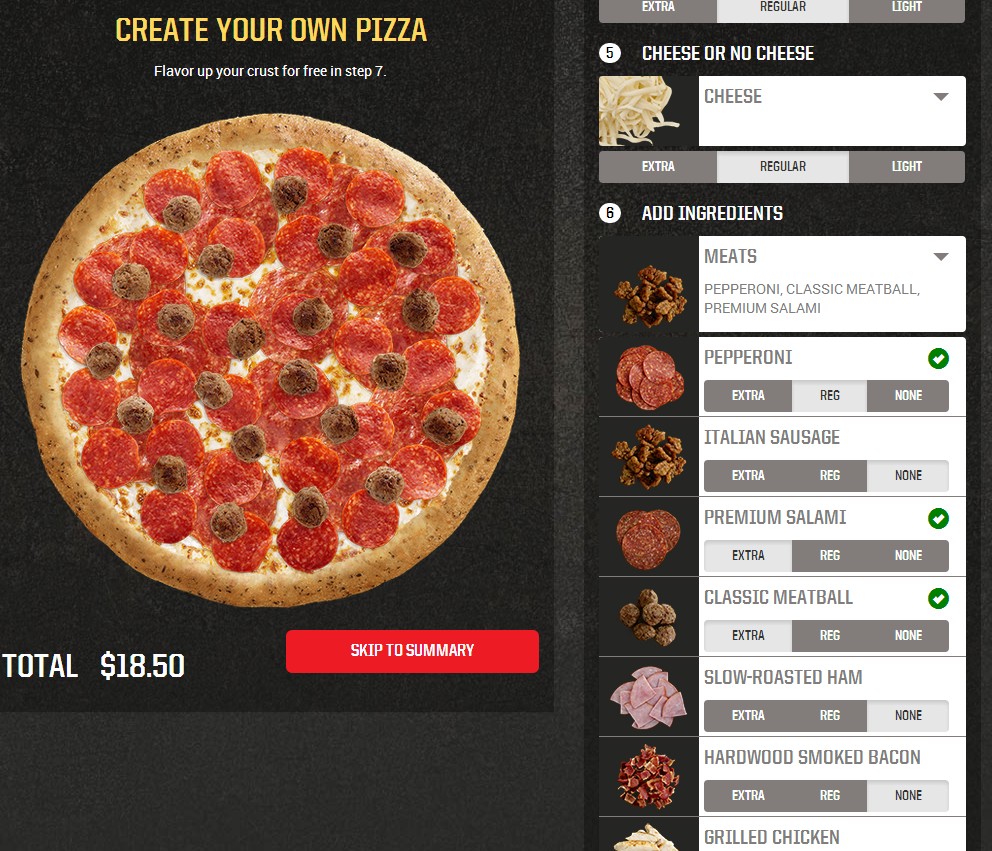
Ten extras are the limit. It won’t cook completely after that. (Sounds like a math problem to me.)
More recently added in our region is a fast-food hamburger restaurant that delivers. I thought I had died and gone to heaven when I heard that you can order hamburgers and French fries online and have them delivered to your door. Isn’t this world amazing, or what? The website of the restaurant of “the king who shall not be named” allows customers to build their own burgers and chicken sandwiches.
While the customer builds the meal, the price is adjusted accordingly. Plotting this data on a coordinate plane allows students to create a scatterplot of burger prices based on a variety of differently priced extras. Using this data, students can construct a linear regression line through the scatterplot to estimate the price of a burger with a certain amount of extras. Other task-based problems involving this data may include a comparison of retail and profit models as well as a discussion of outliers and influential points.
The current influx of computers in the classroom provides an opportunity for students to explore actual websites to construct mathematical models of common tasks, like ordering pizza or burgers online. These tasks align with the Common Core State Standards and Standards for Mathematical Practice. Lesson designs for this type of activity include web searches, scavenger hunts, and WebQuest templates. The range of difficulty could be adjusted to fit a wide range of grade and mathematical skill levels.
Another benefit of using pizza and burger websites to develop functions and linear regression models is the quality of the graphics. Modeling software using “pizza building” functions have been around for a while, but the vividness and realism of current websites makes adding all the extras even more fun.


 Cleaning Off The Whiteboard